If you’re still holding on to your iPhone 14 and wondering whether the new iPhone 17 is worth the switch, you’re not alone. Most iPhone users don’t upgrade every year — instead, they wait three or four years until the feature gap is big enough to justify it. In this article, I’ll break down the key differences between the iPhone 14 and iPhone 17 so you can decide if now is the right time to upgrade.

Also read: Gadgets Review | iPhone News & Tips | iPhone 17 Air Review
Comparison Table: iPhone 14 vs iPhone 17 (Expected / Rumored Specs)
| Feature | iPhone 14 (Baseline) | iPhone 17 (Expected / Rumored) |
|---|---|---|
| Chipset / Performance | A15 Bionic (or A16 in Pro) | A19 Bionic (or newer variant) |
| Display / Refresh Rate | 60 Hz (standard) / 120 Hz (Pro) | 120 Hz for all, possibly brighter, better efficiency |
| Design / Build | Notch design, aluminum / stainless (for Pro) | Dynamic Island, slimmer bezels, possibly new materials |
| Camera System | Dual cameras (or triple + LiDAR in Pro) | Larger sensors, better low-light, more AI image processing |
| Battery & Charging | Decent stamina, standard fast charging | More efficient battery, faster charging, better thermal & power management |
| Software / AI Features | Supports latest iOS, but limited by older hardware | Full support for next-gen AI / on-device features |
| Price / Value | Lower (used / discounted) | Premium on launch, higher resale value possibly |
| Real-World Use Cases | Everyday tasks, social media, casual photography | Heavy editing, gaming, AI features, longer “future proof” life |
Design and Build
The iPhone 14 was already sleek, but the iPhone 17 Air has taken things to another level. Apple introduced its thinnest iPhone ever in 2025, which makes the device noticeably lighter in your pocket. Bezels are slimmer, and the materials feel more premium.

the New iPhone 17 Air
- iPhone 14: Aluminum and glass body, slightly heavier build.
- iPhone 17: Ultra-thin design, stronger materials, and lighter weight.
If you value portability, the design shift is a huge step up.
Display Improvements
The iPhone 14 had a great OLED display, but the iPhone 17 improves brightness, energy efficiency, and refresh rate.
- iPhone 14: Super Retina XDR OLED, up to 120Hz on Pro models.
- iPhone 17: Brighter OLED with more energy efficiency, smoother animations, and better outdoor visibility.
This is especially noticeable if you often use your phone outdoors.
Performance: A16 vs A19 Bionic
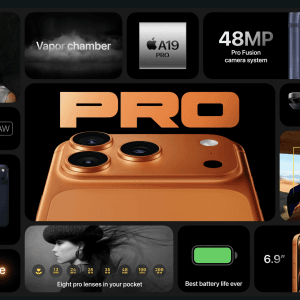
Performance is one of the biggest jumps. The iPhone 14 ran on the A15 or A16 Bionic (depending on the model), while the iPhone 17 packs the A19 chip with Apple’s new AI acceleration capabilities.
- Faster app launches.
- Better multitasking.
- More efficient battery usage.
- Support for advanced AI-powered features.
Apple has also leaned heavily into on-device AI, something you won’t fully experience on an iPhone 14.
(For more on Apple’s latest chips, check Apple’s official newsroom.)
While you’re comparing phones, don’t forget audio — I recently tested the Xiaomi Buds 6 and found they punch above their price when paired with either device.
Camera Upgrades

For many, the camera is the main reason to upgrade.
- iPhone 14: Dual-lens system (main + ultra-wide), solid for everyday use.
- iPhone 17: Triple-lens system with improved low-light performance, advanced zoom, and smarter AI photo editing.
If you love photography or use your iPhone for content creation, the iPhone 17’s camera leap is significant.
Battery Life and Charging
Apple has consistently worked on extending battery life. The iPhone 17 includes a more efficient processor and better thermal management.
- iPhone 14: Decent all-day battery.
- iPhone 17: Longer screen-on time, faster wireless charging, and improved heat dissipation.
For heavy users, this difference is noticeable.
Software Experience
While both phones run on iOS 18, the iPhone 17 has exclusive features powered by the new hardware, especially around Apple Intelligence (AI). For example, live voice translation, AI summaries, and advanced photo editing run smoothly only on newer chips.
This means iPhone 14 users won’t get the full AI experience even if they’re on the same iOS version.
Price and Value
At launch, the iPhone 17 comes with the usual premium price tag. But if you’re using an iPhone 14, you’ll likely get a decent trade-in value to offset the cost.
If budget is a concern, staying with your iPhone 14 for another year is fine — it’s still a capable device. But if you want the latest AI features, camera improvements, and slimmer design, the iPhone 17 is worth it.
If you’re comparing iPhone 14 and iPhone 17, don’t miss this perspective on why the base iPhone 15 remains the best value choice for most people in 2025.
Final Verdict
- Stay with iPhone 14 if… your phone still feels fast, you’re happy with the camera, and you don’t care much about AI-powered features.
- Upgrade to iPhone 17 if… you want cutting-edge performance, thinner design, advanced photography, and access to Apple’s newest AI features.
At the end of the day, the decision comes down to how much you value AI features and design improvements. If you skipped the iPhone 15 and 16, then jumping to the iPhone 17 is a meaningful upgrade.
When comparing phones, don’t forget practical issues — I document how I recovered an iPhone 12 stuck on the Apple logo (spoiler: DFU Mode): https://christechno.com/2025/10/10/iphone-stuck-apple-logo-dfu-mode/