I’ve been using AI every single day—sometimes for writing, sometimes for coding, sometimes just to explore ideas I wouldn’t normally think about. And at some point, I caught myself wondering, Do AIs Increase the Average Human IQ?.

“Does using AI actually make us smarter?
Like… does it increase the average human IQ?”
It’s a fun question, and honestly, I’ve seen people on Reddit and Quora debating versions of this for months. Even The Economist recently highlighted how AI might shift global productivity in unexpected ways (you can read their perspective here: https://www.economist.com).
But let’s break this down from both a practical and a personal standpoint.
What IQ Actually Measures (in simple terms)
IQ is basically a score that shows how well someone can:
- solve problems
- understand patterns
- think critically
So if AI helps us think faster, find answers quicker, or make better decisions… does that count as higher IQ?
Well, not exactly.
IQ measures raw cognitive ability, not performance with tools.
AI Doesn’t Increase IQ — But It Increases “Functional Intelligence”
Here’s the part I’ve personally felt the most.
AI doesn’t magically increase the biological processing power of my brain.
But it massively increases my functional intelligence — my day-to-day ability to solve problems and produce better work.

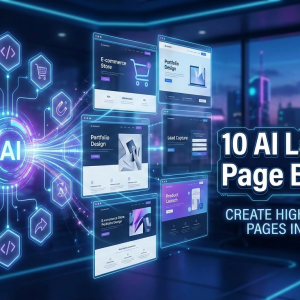
For example, earlier this month I wrote an article on AI tools for building mobile apps with prompts.
Honestly, I wouldn’t even think this was possible 2–3 years ago.
But with today’s AI tools, beginners can build prototypes in hours.
You can check that article here if you’re curious:
🔗 https://christechno.com/2025/12/10/free-ai-tools-build-mobile-app-using-prompts/
Did AI raise my IQ? No.
Did it raise the quality and speed of my output? Absolutely.
The same thing happened to my coding habits.
After using AI consistently, I suddenly became much faster at spotting patterns and structuring problems. I even wrote about this here:
🔗 https://christechno.com/2025/12/01/10-ai-coding-habits-that-instantly-made-me-a-faster-developer-real-examples/
These are the kinds of improvements that make us perform smarter—even if our raw IQ stays the same.
AI as “Cognitive Leverage”
There’s a term I borrowed from an article in Harvard Business Review (https://hbr.org) called cognitive leverage.
It means using tools that multiply the impact of your thinking.
That’s exactly what AI is.
It’s like giving everyone:
- a real-time tutor
- a brainstorming partner
- a research assistant
- a proofreader
- and sometimes a therapist
all in one.
This is also why I’m not a big fan of using one AI for everything. Different tools shape how we think in different ways, and relying on a single model can actually limit that. I talked more about this idea in a separate piece on why you shouldn’t use one AI for every task.
👉 https://christechno.com/2025/12/15/stop-using-one-ai-for-everything/
This kind of support didn’t exist at scale before.
So even if average IQ doesn’t rise, average output surely will.
But There’s a Catch (based on my own experience)
AI also makes it easy to stop thinking.
I noticed this when I was writing an article on making money online here:
🔗 https://christechno.com/2024/11/17/5-ways-of-how-to-make-money-online-easily/
At first, I relied too heavily on AI to create the structure, and the result felt “bland.”
So I rewrote parts manually, added my personal experiences, and then used AI to refine it.

That balance — human thought first, AI second — works much better.
I’ve learned that the more I use AI, the more intentional I need to be about actually thinking. Otherwise, it becomes too easy to outsource everything.
So… Does AI Increase Average Human IQ?
Short answer: No.
AI does not change our biological intelligence.
But long answer: It increases what humans can do with the intelligence they already have.
And historically, when tools increase productivity, problem-solving, and access to knowledge, society acts smarter even if IQ scores remain the same.
(It’s the same pattern calculators introduced in the 1970s.)
If anything, AI might create a new kind of intelligence measurement—one that considers how well someone uses tools, not just how well they think unassisted.
Personal closing thought
I don’t feel “smarter” in the IQ sense after using AI.
But I do feel like someone upgraded my workflow, my creativity, and even my curiosity.
AI didn’t increase my intelligence.
It increased my capabilities.
And honestly?
That matters far more in real life.