The crypto market in 2026 has become a battlefield of high-frequency algorithms and instant sentiment shifts. For those of us who have been in the space for years, the challenge isn’t finding data—it’s filtering it. We know the technicals, we see the charts, but we are still human. We still feel that “twitch” in our index finger when Bitcoin dips 5% in ten minutes.

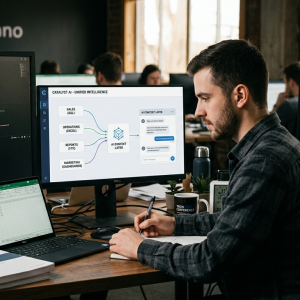
This March, I decided to test a new layer of discipline. I didn’t build a fully autonomous bot. Instead, I ran a “Validation Experiment.” Every single time I felt the urge to hit Buy or Sell, I forced myself to stop and submit my reasoning to a “Committee of LLMs”—specifically Gemini 1.5 Pro and ChatGPT-4o.
I wanted to see if AI could act as a digital “cooling-off period” for my own trading instincts.
The Methodology: The “Verification” Protocol
The process was simple but strict. Before any trade was executed on Binance or Coinbase, I had to provide the AI with three things:
- The Context: The current price, the 4-hour RSI, and the 24-hour volume.
- The Catalyst: The news or technical breakout I thought I was seeing.
- The Proposal: “I want to sell 20% of my position now. Is this an emotional reaction or a logical exit?”
I wasn’t looking for a “Yes” or “No.” I was looking for a logic check. If both AIs flagged my decision as “Sentiment-Driven” rather than “Data-Driven,” I was forbidden from making the trade.
The “March 12” Panic Test
The real value of this method appeared during the mid-month volatility. Bitcoin hit a resistance level that historically triggered a sell-off. My “gut” told me to dump my position and wait for a lower entry. I was convinced.

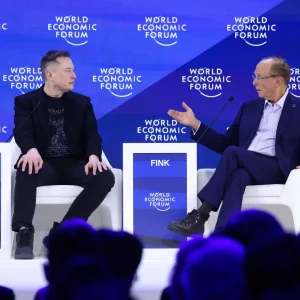
I prompted the AIs with my plan. Gemini responded with a fascinating counter-point: it analyzed the recent Elon Musk Davos 2026 predictions regarding AI-driven economy liquidity and suggested that the current “sell wall” was actually an accumulation zone for institutional buyers. ChatGPT concurred, noting that the “Open Interest” hadn’t actually peaked yet.
I stayed in. Two days later, Bitcoin broke through that resistance and climbed another 6%. By letting AI verify my decision, I avoided a premature exit that would have cost me thousands in missed gains.
The Verdict: Satisfying or Just Stressful?
At the end of the month, the results were eye-opening. By using AI as a validator, I made 35% fewer trades than I usually do.
- The ROI: My portfolio ended March up 11.2%.
- The Insight: The most satisfying part wasn’t the profit; it was the clarity. Most of the trades the AI “vetoed” turned out to be noise.
I’ve explored how to use AI for high-engagement content and even how to stop using one AI for everything, but using it as a mirror for my own financial biases has been the most practical application yet.
Will I continue? Yes. But not as a slave to the AI. I’ve realized that I don’t need a bot to trade for me; I need a bot to tell me when I’m being a “greedy human.” For the foreseeable future, every Bitcoin decision I make will go through the “LLM Committee” first.