
I didn’t expect to stop and stare at a checkout counter, but that’s exactly what happened the first time I used Uniqlo’s self-checkout. I put a basket full of shirts into the checkout area, fully expecting the usual routine — scan one item, wait for a beep, repeat until bored.
Instead, the screen instantly showed every item, complete with size, color, quantity, and the total price. No scanning. No rearranging. No error messages.

I paid and walked out in less than a minute.
That experience made me wonder: this clearly isn’t new technology, so why does it still feel rare — and why can’t most stores do the same thing?
This Isn’t Barcode Magic — and It’s Not a Super Camera Either
At first glance, it feels like the system is using some kind of advanced camera that can read barcodes from any angle. But that’s not what’s happening.
Uniqlo’s self-checkout relies primarily on RFID (Radio Frequency Identification).
Each product has a tiny RFID chip embedded inside the tag or label. It’s invisible, not magnetic, and doesn’t need to be removed. When you place multiple items into the checkout tray, RFID readers underneath instantly detect all of them at once.
Unlike barcodes, RFID:
- Doesn’t need line of sight
- Doesn’t care about orientation
- Works even when items are stacked
If you’re curious about how this works at a technical level, this overview of RFID in retail explains it clearly without being overly academic:
https://www.ibm.com/topics/rfid
That’s why the checkout feels “instant.” The system isn’t guessing — it already knows exactly what you’re buying.
Why This Feels So Effortless Compared to Regular Self-Checkout
Most self-checkout systems still push the work onto customers. You scan, you wait, you fix mistakes when the machine complains.
Uniqlo removes almost all of that friction.

Good automation doesn’t just save labor — it reduces cognitive effort. You don’t have to think about how to use the system; you just use it.
I had a similar feeling the first time I saw how deeply technology is integrated into daily life in places that are already operating “ahead of schedule,” something I wrote about after seeing China’s smart cities firsthand in
http://christechno.com/2025/10/26/chinas-smart-cities-are-living-in-2030-and-yes-ive-seen-it-myself/
The best tech doesn’t announce itself. It quietly gets out of the way.
Similar Systems Exist — But They Solve the Problem Differently
Uniqlo isn’t the only company trying to remove checkout friction.
Amazon Go stores famously let customers walk in, grab items, and leave without checking out at all. Their system combines cameras, sensors, and AI, which Amazon explains in detail through their “Just Walk Out” technology overview:
https://aws.amazon.com/just-walk-out/
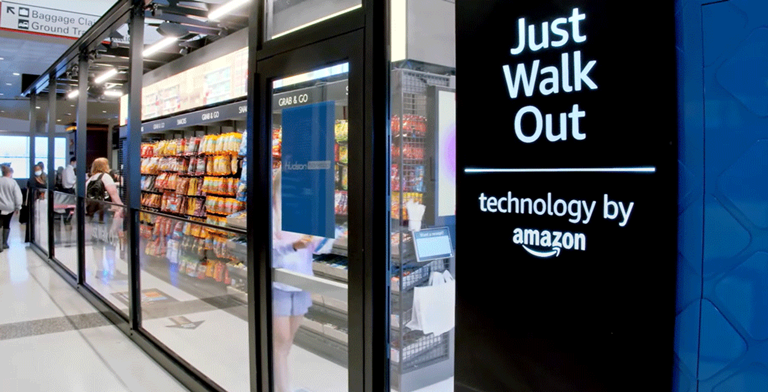
Some fashion retailers use RFID mainly for inventory tracking, not checkout. Others still rely on traditional barcode-based self-checkout because it’s cheap and universal.
So the technology isn’t rare — the implementation is.
Why Convenience Stores Still Can’t Copy Uniqlo Self-Checkout
This is where reality kicks in.
Cost matters more than people think
RFID tags are still more expensive than printed barcodes. That cost makes sense for clothing, but it’s painful for low-margin items like snacks or bottled drinks.
Supply chains are fragmented
Uniqlo controls its products from manufacturing to store shelves. Convenience stores rely on hundreds of suppliers. For RFID checkout to work flawlessly, every supplier must follow the same standards — which is easier said than done. This is also why organizations like GS1 exist, trying to standardize identification systems globally:
https://www.gs1.org/standards/rfid
Packaging creates technical problems
Liquids, metals, and foil packaging interfere with RFID signals. Unfortunately, those are exactly the products convenience stores sell the most.
Automation increases edge cases
When things go wrong, staff still need to step in. That complexity often cancels out the time savings.
This reminds me of smart home automation. You can buy affordable gadgets under $50 that make parts of your home smarter today, but a fully seamless setup still requires ecosystem control — something I explored in
http://christechno.com/2025/10/30/smart-home-on-a-shoestring-budget-top-gadgets-under-50-you-need/
The Real Reason Uniqlo Makes This Look Easy
Uniqlo’s checkout feels futuristic not because RFID is new.
It feels futuristic because their business model enables it:
- Standardized products
- Minimal variation
- Tight integration between inventory, checkout, and payment
The technology follows the strategy, not the other way around.
It’s the same pattern we see with humanoid robots. The idea sounds ready, but the real world is messy. Until the ecosystem catches up, adoption stays slow — a theme I touched on when thinking about whether Tesla Optimus could realistically become a household helper in
http://christechno.com/2024/10/15/will-tesla-optimus-3-be-the-future-of-household-helpers/
Will This Become Normal Everywhere?
Eventually, yes — but not overnight.
As RFID gets cheaper and retail operations become simpler, more stores will adopt systems like this. Fashion retailers will lead. Electronics may follow. Convenience stores will be last.
For now, Uniqlo’s self-checkout feels like a glimpse of a future that already works — just under very specific conditions.
And once you’ve experienced it, going back to scanning barcodes feels strangely outdated.


